For many parents, the idea of starting Japanese language lessons in preschool or kindergarten may seem surprising. However, young children learn new languages primarily through everyday experiences, play, and natural contact with spoken language. They don’t learn by memorizing rules, but gradually become familiar with new sounds, words, and ways of communicating.
Therefore, their first encounters with the Japanese language don’t have to resemble traditional lessons. Carefully designed classes allow children to learn the language at their own pace, through activities tailored to their age, interests, and developmental stage. This makes learning a natural part of everyday life, not just another chore.
Table of contents
- Why is Japanese easier for young children than for adults?
- When Can a Child Start Learning Japanese? The Critical Window in Practice
- Japanese or Chinese – which Asian language should you choose for your child in nursery?
- What’s it like learning Japanese at ITSW Nursery? A day in the life of a group.
- What does a child learn from Japanese after nursery school – and what next in kindergarten?
- Japanese vs. English and/or Polish – won’t your child get confused?
- Japanese Nursery in Warsaw – Saska Kępa ITSW Campus
Why is Japanese easier for young children than for adults?
Young children learn languages (including Japanese) in a completely different way than adults. Instead of analyzing grammatical rules, they first listen, observe, and imitate. They learn new words and phrases through shared activities, gradually becoming familiar with their sounds and meanings.
When beginning to learn Japanese, adults often focus on grammar, writing systems, and sentence structure. A child approaches this differently. First, they memorize the melody of the language, recognize repetitive words, and begin to respond to simple messages. Only over time do they begin to notice emerging patterns.
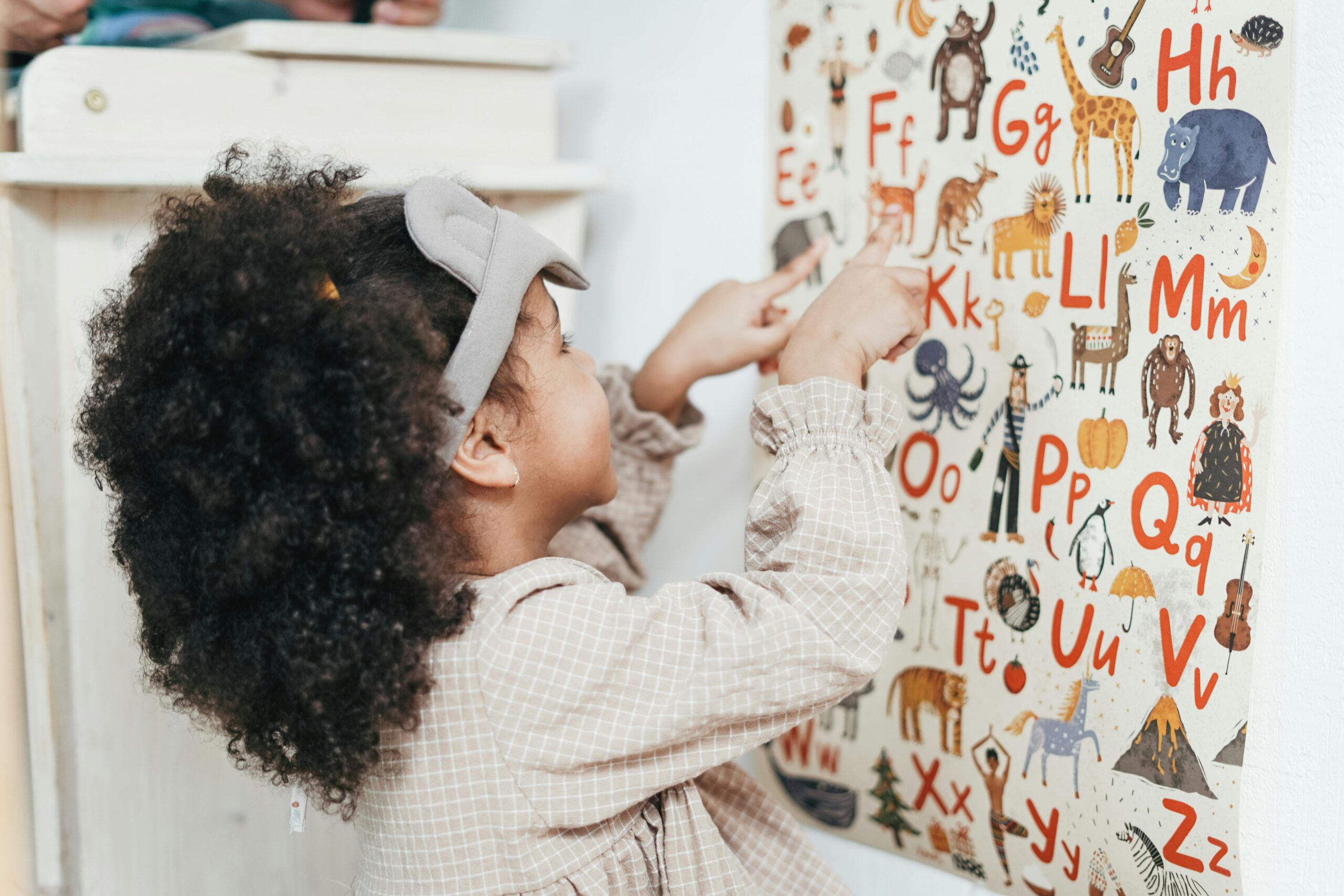
That’s why games, songs, physical activities, and visual materials work well with young children. They introduce new vocabulary in a natural context, and learning becomes more like shared play than traditional lessons. This can be compared to the learning experience in a Japanese nursery/kindergarten.
At this age, children are also particularly receptive to new sounds. They readily repeat them and gradually become familiar with pronunciation and intonation. Initially, the goal isn’t to engage in casual conversation, but to build listening comprehension and encourage simple responses to messages.
This doesn’t mean, of course, that Japanese is easy. For those raised in a European language environment, it can be considered one of the more challenging languages due to its different grammar and writing systems. However, for children under three, there are no easier or more difficult languages. All languages are simple, provided they are introduced through immersion.
When Can a Child Start Learning Japanese? The Critical Window in Practice
There is no single point at which every child should begin learning a language. Exposure to a new language can be introduced at an early stage of development, provided the approach is appropriate for the child’s abilities.
During the preschool and kindergarten years, it’s not about mastering grammar or memorizing long lists of words. Much more important is gradually immersing yourself in the language, participating in games, listening to songs, and responding to simple messages.
Therefore, classes for the youngest are based primarily on:
- learning through play,
- frequent use of the same words and phrases, making it easier for the child to learn them through frequent repetition of words and phrases,
- short, varied activities,
- a calm pace of work,
- learning the language in combination with elements of culture,
- adapting materials to the age and abilities of children
This approach reflects the natural way in which young children learn languages. Instead of focusing on explaining rules, teachers build understanding through daily exposure to the language and a variety of activities, just as teachers do in countries where the language is the means of communication.
At ITSW, children operate in an environment based on the OPOL (One Person, One Language) method. This means that individual teachers consistently communicate with children in their assigned language, making contact with it a part of everyday life, not just specific activities. For the method to be effective, children should be immersed in a given language for at least 40% of their waking hours each week.
Equally important is carefully observing each child’s needs. Some children quickly begin repeating new words, while others need more time to become accustomed to their sounds. Much depends on how quickly the child establishes a rapport with their caregivers. Both responses are natural, so learning occurs at their own pace, without pressure or comparisons.
Japanese or Chinese – which Asian language should you choose for your child in nursery?
Parents interested in Asian languages often wonder which would be a better choice to start with. In practice, the environment in which the child will learn the new language and the way the classes are conducted are far more important than comparing the level of difficulty.
Japanese and Chinese differ in both pronunciation and structure. Chinese is a tonal language, while Japanese uses a different grammatical system and several writing systems. However, this doesn’t mean that one will be appropriate for all children.
For the youngest, learning doesn’t begin with learning signs. First, children become familiar with the sound of the language and learn to respond to simple messages. Writing is gradually introduced as a child’s natural environment.
When children speak Japanese and begin learning to write, the first step is usually hiragana, followed by katakana. These are two Japanese syllabaries that serve a different function than the alphabet used in Polish. Kanji characters also appear over time, but learning them requires greater maturity and systematic practice, so they are not part of a child’s initial exposure to the written language.
The most important thing is to create conditions in which a child can learn a new language naturally – through listening, observation, play, and everyday experiences. This approach builds a solid foundation for further learning.
What’s it like learning Japanese at ITSW Nursery? A day in the life of a group.
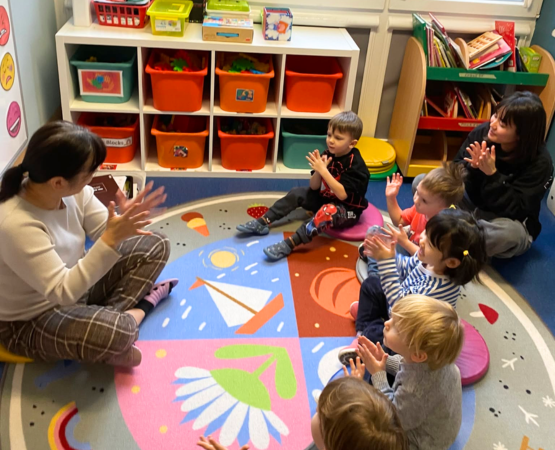
Learning Japanese at ITSW Nursery isn’t like a traditional lesson where children sit at tables and complete exercises. The language becomes part of everyday experiences—it emerges during shared activities, play, and situations that come naturally to young children.
Children learn new words and phrases through action. They can listen to songs, participate in games, perform movement exercises, and use visual materials. This makes language not a discrete set of information, but a communication tool that emerges in a specific context.
Small groups allow the teacher to closely observe the children and adapt their teaching methods to their needs. This is especially important for the youngest children, as each child develops at their own pace—some eagerly repeat new words, others need time to calmly familiarize themselves with the language. Just as if the children were attending a Japanese nursery or kindergarten, during classes they learn about the world around them and become familiar with it.
- basic greetings and phrases used in everyday situations,
- numbers,
- animal names,
- simple words and phrases,
- short messages useful during joint activities.
However, the goal isn’t to immediately memorize all the words a child learns or to be able to write them down. In early childhood education, the most important thing is building a positive relationship with language and gradually developing listening comprehension.
Exploring Japanese culture is also a crucial part of learning. After all, language doesn’t exist in isolation from its origins. Origami, stories, elements of tradition, and interesting facts about the land of the rising sun allow children to better understand the context of new words and develop their curiosity about the world.
Contact with culture helps us look at language more broadly – not only as a way of communicating, but also as part of the history, customs and everyday life of the inhabitants of a given country.
Working with native-speaking teachers allows children to experience the natural sound of the language. Daily contact with someone who speaks Japanese is a valuable addition to the educational process, especially in the areas of pronunciation and listening comprehension.
What does a child learn from Japanese after nursery school – and what next in kindergarten?
After kindergarten, the most important outcome of exposure to Japanese isn’t perfect vocabulary or the ability to hold complex conversations. For the youngest children, the key is becoming familiar with the sound of the language, understanding it at a level appropriate for their age, and laying the foundation for further learning.
A child may know basic greetings, numbers, animal names, and simple phrases used in everyday activities. They may also recognize and respond to some messages in natural situations.
Subsequent stages of education allow for the gradual development of these skills. In preschool, more structured language work can be introduced, adapted to the age and abilities of children. Over time, the first elements of writing also appear—including hiragana and katakana—but always at a pace appropriate for the child’s development.
Learning characters shouldn’t be limited to mechanical memorization. Children can connect notation with sound, image, and meaning, making new information easier to assimilate. More advanced elements, such as kanji, appear only in later stages of education.
As children grow older, they can gradually develop a more communicative approach to learning. Children begin to produce short sentences, ask simple questions, and use learned words in new situations.
Continuous exposure to the language remains paramount. Regular exposure to it from an early age ensures that subsequent stages of learning can be a natural continuation of previous experiences, rather than starting all over again.
Japanese vs. English and/or Polish – won’t your child get confused?
Many parents wonder whether introducing another language at such an early stage of development will be too much for their child. However, exposure to Japanese alongside English and Polish doesn’t have to lead to confusion. Children are capable of gradually recognizing different language systems and recognizing that individual words and modes of communication can function in different contexts.
As with any foreign language, consistency, appropriate difficulty level, and delivery are key. Learning an additional language shouldn’t put pressure on a child or require them to achieve specific results quickly.
Early exposure to different languages allows children to learn different sounds, speech rhythms, and ways of constructing sentences. Japanese differs significantly from Polish—in terms of pronunciation, grammar, and sentence structure. However, these differences don’t have to be a barrier for children. Young children don’t analyze language the way adults do—they first learn it intuitively, through experience.
It’s also not about treating learning another language as a guarantee of specific future achievements. What matters most is developing genuine communication skills, curiosity about the world, and openness to other cultures.
A properly prepared educational environment allows for the right balance. Children can develop their native language while gradually learning the Japanese language and culture in a way appropriate for their age.
Japanese Nursery in Warsaw – Saska Kępa ITSW Campus
When choosing a place where a child will begin their exposure to a new language, it’s worth considering more than just the curriculum. Teachers’ work ethic, the atmosphere at the facility, group sizes, and opportunities for continuing education at subsequent stages of the child’s development are also important.
At the Saska Kępa ITSW campus, Japanese is part of a broader educational environment where children have daily contact with multilingualism and cultural diversity. Learning is conducted in a way that is age-appropriate—through play, activities that engage multiple senses, and situations that are close to the child’s everyday experience.
Small groups allow teachers to better understand the needs of individual children and adjust their pace accordingly. Educating young children isn’t about quickly achieving a specific language level, but rather creating an environment in which children can calmly develop their skills and build positive associations with learning.
Another important element of the program is connecting the language with Japanese culture. This allows children to learn not only new words and phrases but also the context in which the language functions. This approach fosters curiosity about the world and demonstrates that every language is part of a larger history and tradition.
For many families, the opportunity to continue their education in one environment is also important. Beginning early exposure to the language allows for gradual development of competences as the child ages—from their initial exposure to the sounds of the language, through increasingly conscious use of words and phrases, to subsequent learning elements.
Trial classes are available to parents, allowing them to see what the lessons are like, learn about the teacher’s work, and see how their child responds to a new language environment. This is a good way to determine whether a given form of education meets the needs of a specific child.
In subsequent stages of education, the material can be gradually expanded. The child progresses from simple words and phrases to increasingly independent communication, learning new elements of language, and over time, in subsequent stages of education, also develops the skills of reading, writing, and understanding more complex structures.
In educating the youngest, the most important thing is to create a solid foundation – curiosity, openness and a positive attitude towards learning new languages.
Contact with the Japanese language can become not only the first step in learning the language for a child, but also an opportunity to learn.